UFC Live Betting Strategies and In-Play Market Edges
 Available in US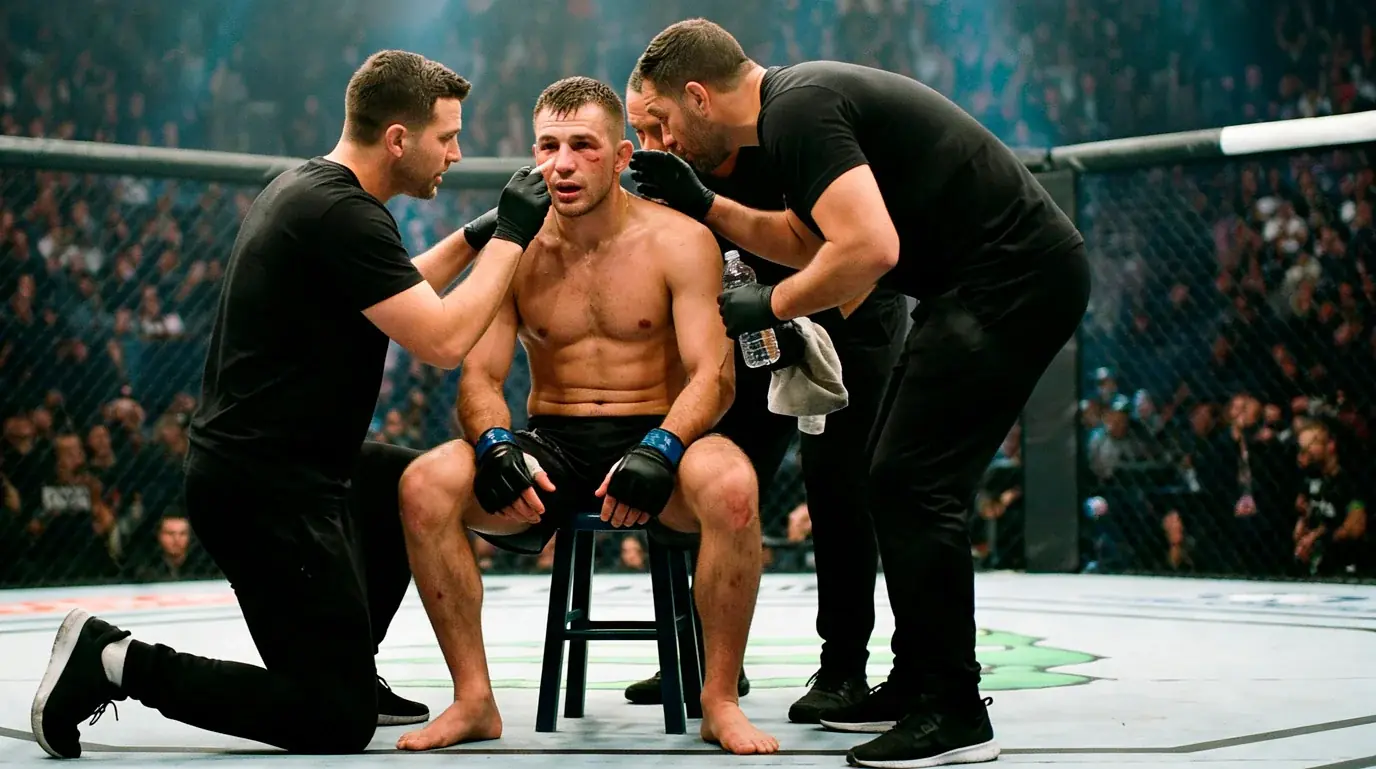
The first time I placed a live UFC bet, I did it purely on adrenaline. A fighter I had backed pre-fight was losing after round one, and I panicked – doubled down on him at longer odds because “he’s due for a comeback.” He was not due for anything. He lost a unanimous decision, and I had twice the money on a losing outcome. That was the most expensive lesson I have learned in this market, and it taught me that live betting without a system is just gambling with extra steps.
In-play wagering now accounts for over 62% of online betting revenue globally, growing at a compound annual rate of nearly 14%. UFC is one of the sports driving that growth, because the format is perfect for live betting – short fights, clear momentum shifts between rounds, and dramatic swings that send odds lurching in real time. The UFC stages 43 live events annually across 350 hours of programming, which means in-play betting opportunities come up nearly every week of the year. But the same volatility that makes UFC live betting exciting makes it dangerous for anyone who confuses reaction speed with analytical clarity.
This guide covers how UFC in-play markets actually function, the specific signals I watch for between rounds, when to place a live bet and when to sit on your hands, and the five mistakes I see bettors make over and over again. Live betting can be genuinely profitable if you have a framework. Without one, it is the fastest way to drain a bankroll in combat sports.
In-play momentum shifts are crucial when evaluating UFC round betting and over/under totals during the later stages of a fight.
UFC In-Play Markets – Real-Time Wagering Dynamics
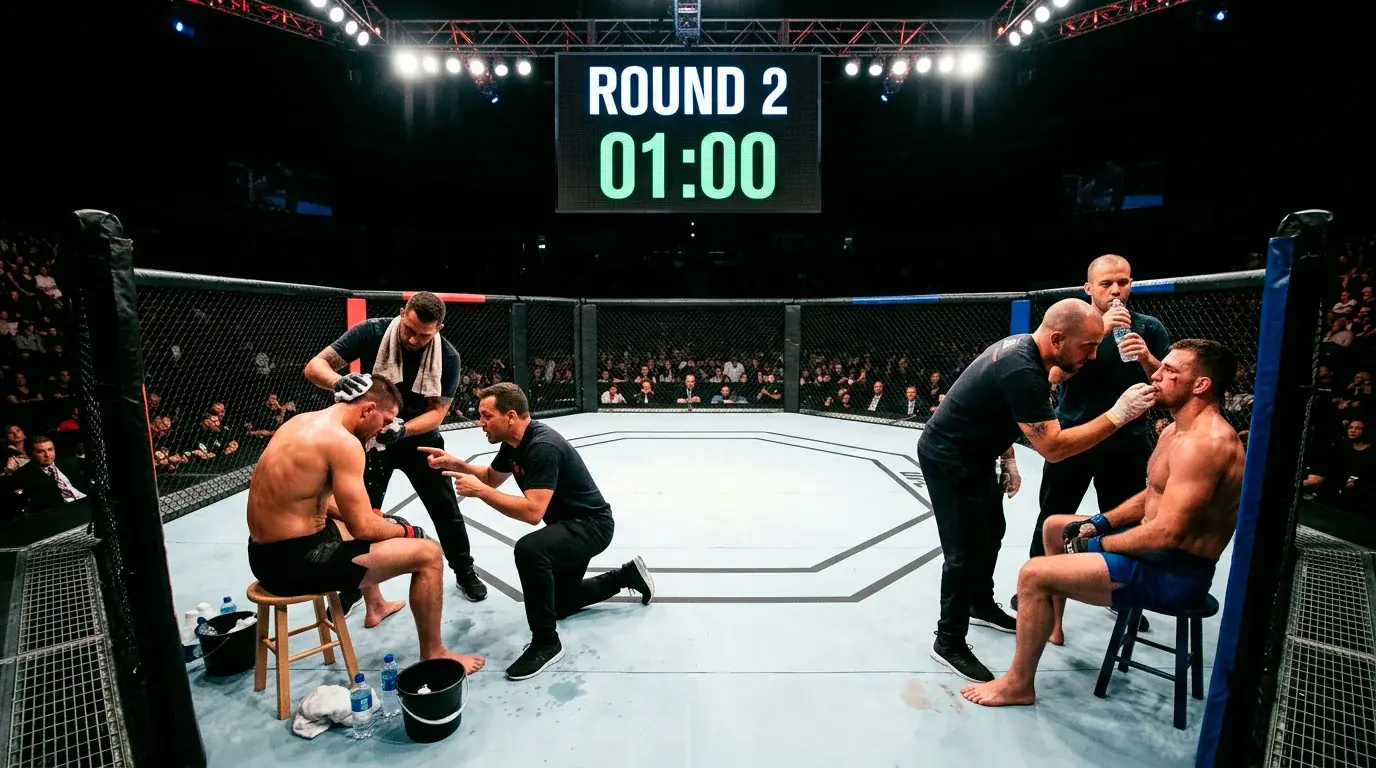
UFC in-play betting operates differently from live betting in football or tennis, and if you approach it with the same expectations, you will get burned. The window for placing a bet is narrow – markets typically close during active fighting and reopen during the sixty-second rest periods between rounds. Some bookmakers keep a limited moneyline open during the round itself, but the odds update so rapidly during action that getting a bet accepted at the price you see on screen is inconsistent.
The UFC runs 43 events per year, with each card typically featuring ten to fourteen bouts. That means roughly 500 to 600 fights annually, each generating in-play opportunities between every round. The practical rhythm is: watch the round, assess what happened, check the updated odds during the break, decide whether the new price represents value, and place or pass before the next round begins. You have about forty-five seconds of useful decision time after the round ends and before the next one starts, minus whatever time the bookmaker takes to refresh prices.
Most UK bookmakers offer in-play moneyline, method of victory, and total rounds markets for UFC main cards. Some extend this to the full prelims, but market depth drops significantly for undercard fights. Prop markets are rarely available in-play. The key difference from pre-fight betting is that the odds have already absorbed one or more rounds of information, so you are not predicting from a blank slate – you are updating a picture that both you and the bookmaker are watching in real time.
The bookmaker has one advantage over you in-play: algorithmic speed. Their models update odds based on strike counts, knockdowns, and round outcomes almost instantly. Your advantage is contextual: you can see things the algorithm cannot easily quantify – a fighter breathing through his mouth in the corner, a swelling closing one eye, a noticeable limp that did not register as a knockdown. The intersection of those two information streams is where live betting edges exist.
Round-by-Round Signals Worth Watching
Watching a UFC fight for entertainment and watching it for live betting are two completely different activities. As a bettor, you are not looking for highlights – you are scanning for signals that predict what happens next. Here are the three categories of in-play signals I track, ranked by reliability.
Striking Dominance Cues
Striking dominance is the most visible signal and the one the betting public reacts to most aggressively, which means the market often overprices it. A fighter who lands a flashy combination in round one will see his odds shorten dramatically between rounds, sometimes more than the actual damage warrants.
What I look for instead of highlight moments: sustained output differential. If Fighter A landed 35 significant strikes in round one and Fighter B landed 12, that gap is meaningful. But if both fighters landed between 20 and 25, and Fighter A happened to land one big shot that wobbled his opponent for two seconds, the round was closer than it appeared. The in-play odds will overreact to the wobble. That overreaction is your opportunity – either to back the fighter who wobbled at newly inflated odds if you believe the wobble was a one-off, or to lock in value on the dominant striker if you think the momentum is real.
Leg kicks are the most underappreciated striking signal in live betting. They do not look dramatic on screen, but cumulative leg kick damage degrades a fighter’s movement, power, and cardio over the course of a fight. A fighter who has absorbed fifteen leg kicks through two rounds is fighting on compromised legs in the third. The algorithm does not weight this as heavily as knockdowns, but the effect on fight outcome is substantial.
Grappling Control Shifts
A grappling control shift is the most reliable live betting signal I have found in nine years of UFC analysis. When a fighter who was expected to control the grappling loses the wrestling exchanges in round one, the entire fight model changes – and the live odds often do not adjust enough.
Specifically: if a wrestler attempts three takedowns in round one and completes zero, that is a red flag for his entire game plan. His pre-fight odds were built on the assumption that he could take the fight to the mat. One round of evidence suggests he cannot. The live moneyline will drift against him, but rarely by enough – because the algorithm still weights his career takedown average, which includes fights against weaker defenders. You are seeing real-time matchup data. The model is still averaging across historical fights.
The reverse is equally valuable. If an underdog who was expected to be wrestled keeps the fight standing for an entire round, his confidence grows and his opponent’s confidence erodes. Momentum in grappling exchanges is not linear – it compounds. Fighters who fail early takedowns often stop attempting them, conceding the fight location to their opponent entirely.
Cardio and Pace Fade
Cardio is the great equaliser in MMA. A technically superior fighter with poor conditioning can look dominant for eight minutes and then look helpless for the remaining seven. If you can spot the cardio fade before the algorithm reprices it, you have one of the best live betting edges available.
The signs are physical and visible: a fighter dropping his hands between exchanges, leaning on the cage during clinches, mouth breathing heavily in the corner, taking longer to get off the stool between rounds, shoulders slumping forward instead of staying square. None of these register in the strike-count data that drives algorithmic pricing. All of them predict a dramatic decline in output and defence in subsequent rounds.
Pre-fight favourites hold a significant historical edge in the UFC, but that edge collapses when conditioning fails. A fighter who was expected to dominate based on skill and record becomes vulnerable the moment his body stops cooperating. The market knows that cardio matters in the abstract, but in-play pricing lags behind the visual evidence because the models weight historical cardio data over real-time observation. When I see a favourite fading in rounds two or three, I check whether the underdog’s live price offers value as the comeback candidate – and it often does.
One specific scenario I look for: a wrestler who spent the first two rounds burning energy on takedown attempts against a fighter with elite takedown defence. By round three, the wrestler is exhausted from the effort, his striking slows down, and the opponent – who spent two rounds defending and conserving energy – is now the fresher fighter. The scorecards might be close, but the momentum has flipped entirely. The live price on the defender at this point is often too long because the algorithm still sees the wrestler as the aggressor based on round-one activity levels.
Timing Your In-Play Bet
Line movement in UFC is more frequent and impactful than in any other sport – a reality that becomes even more pronounced in-play. When the break between rounds hits, prices shift fast as the bookmaker reprices based on what just happened. Your timing within that sixty-second window matters.
I place the majority of my live bets in the first fifteen seconds after odds reopen between rounds. That is when the price reflects the round that just ended but has not yet absorbed the full wave of public money that follows. If a favoured fighter lost a round, the public tends to panic and back his opponent, pushing the opponent’s price down further. Getting in before that public wave lands gives you a better number.
There is an exception: after a dominant round by the favourite, I sometimes wait. The public piles onto the winning side immediately, which shortens the favourite’s price to the point where the value evaporates. If I want to back the favourite after a strong round, I wait for the over-correction and see if the price settles slightly higher before the next round begins. This requires patience and a willingness to miss the bet entirely if the price does not come back – but getting a better number by waiting twenty seconds is worth the occasional missed opportunity.
The worst time to place a live bet is during a round, if your bookmaker even allows it. Prices during active fighting are erratic, spreads widen, and execution is unreliable. I treat between-rounds as the only valid betting window and ignore everything the live market shows me while the fighters are actively engaged. Discipline with timing separates profitable live bettors from reactive ones.
Live Odds Movement Patterns
Live UFC odds follow predictable patterns that you can learn to read once you have watched enough fights with a betting screen open alongside the broadcast. The global MMA wagering market has grown at 17% year-on-year, and the in-play portion is growing even faster – bookmakers are investing heavily in their live-pricing algorithms as a result. Understanding how those algorithms behave gives you a structural advantage.
Pattern one: the knockdown overcorrection. When a fighter gets dropped, his live odds lengthen dramatically – often by 50% to 100% within seconds. If he recovers quickly and shows no lasting damage, those odds represent a window of value that typically closes within the next thirty seconds as the market self-corrects. I have won some of my best bets by backing fighters immediately after they recovered from a knockdown, when the live price treated the knockdown as a near-finish rather than a momentary lapse.
Pattern two: the grappling discount. Rounds dominated by grappling produce smaller odds movements than rounds dominated by striking, even when the grappling round was more decisive on the scorecards. The market – driven by casual bettors who find grappling boring – underweights positional control. A fighter who spent four minutes in top control in round one has a significant lead on the scorecards, but his live odds might only shorten marginally. That underpricing is consistent and exploitable.
Pattern three: the late-round drift. In five-round fights, a fighter who is clearly ahead on the scorecards after three rounds sees his live odds shorten to a point where the value disappears. The market assumes the leader will coast to a decision. But fighters who coast in championship rounds sometimes get caught – and the long-shot price on the trailing fighter in rounds four and five occasionally offers genuine value when the leader has shown cardio issues.
Stay updated with the latest live wagering tips by visiting our premier MMA betting resource.
In-Play Markets Available
Not every pre-fight market survives the transition to in-play. Knowing which markets are available live – and which ones offer the best value – saves you from wasting time looking for options that do not exist during the fight.
The moneyline (fight winner) is always available in-play on main card bouts at every major UK bookmaker. This is the core live market, and it is where most of the in-play volume concentrates. Over/under rounds is typically available between rounds but may close during action. Method of victory is available at some bookmakers between rounds, though the selection narrows as the fight progresses – by round three of a three-round fight, the only live method markets may be “decision yes/no” or “fight to go the distance.”
Bet builders and exact round bets are almost never available in-play. Props disappear entirely once the fight starts. Parlays can include live selections at some operators, but combining a live moneyline with pre-fight selections on other bouts requires checking your specific bookmaker’s rules.
One market that often gets overlooked in-play is “fight to go the distance” after the first round of a three-round bout. If both fighters have survived a competitive opening round without either being significantly hurt, the probability that the fight goes to decision has increased measurably. The live price on “yes” frequently does not adjust enough after a clean first round, because the algorithm is still weighting the pre-fight finish-rate data. I find value on “goes the distance – yes” after uneventful opening rounds more often than in any other live market.
My in-play betting is almost exclusively moneyline and over/under. Those two markets give me enough flexibility to express any view I develop during the fight – who is winning, whether the fight will last, and whether the current price reflects what I am seeing. Adding more complex markets to live betting adds cognitive load without proportional reward.
The Five Live Betting Mistakes I See Most Often
After nine years of live UFC betting, I have made every mistake on this list at least once. Some of them I made dozens of times before the pattern finally clicked. Here are the five that cost bettors the most money.
Revenge betting after a bad pre-fight result. Your pre-fight pick is losing after round one. The temptation to double down at longer odds is overwhelming because it feels like you are getting a “discount” on the same fighter. You are not. You are adding money to a losing position based on the same analysis that was wrong in the first place. If your pre-fight read was incorrect, the live price is not a bargain – it is a warning.
Reacting to commentary instead of watching the fight. Broadcast commentators are entertainers, not analysts. They emphasise dramatic moments – the big punch, the takedown, the submission attempt – and underplay the grinding positional work that actually decides rounds. If you are betting based on what the commentator says rather than what you see, you are outsourcing your analysis to someone who is not trying to make you money.
Betting every fight. A twelve-fight card does not offer twelve live betting opportunities. Most fights play out in a way that confirms the pre-fight odds rather than challenging them. The market is correct more often than it is wrong, and live betting on a fight where the pre-fight favourite is winning as expected offers no edge. I aim for one or two live bets per card, and some cards produce zero.
Ignoring the over/under in-play. Most live bettors fixate on the moneyline and ignore the total rounds market entirely. But after watching two rounds of a three-round fight, you have consumed 66% of the available information about whether the fight will go the distance. The over/under is often the highest-value live market because you are making a prediction with two-thirds of the data already visible.
Chasing losses across multiple fights. A bad bet on the first fight of the night should not change your approach to the second fight. But the psychological pull is real: you want to make back what you lost, so you bet more aggressively on the next bout. This is where bankroll management intersects with live betting – set your per-event live budget before the card starts and do not exceed it regardless of early results.
Frequently Asked Questions
Can I bet on a UFC fight after it has started?
Yes. Most UK bookmakers offer in-play betting on UFC main card fights, with markets reopening during the rest periods between rounds. The moneyline and over/under rounds are the most widely available live markets. Some bookmakers also keep limited markets open during active fighting, though execution can be inconsistent.
How quickly do UFC in-play odds change between rounds?
Odds update within seconds of a round ending. The biggest shifts happen after decisive rounds – a knockdown, a dominant grappling round, or a visible injury can move the moneyline by 30% to 50% in the first fifteen seconds of the break. Prices continue to adjust throughout the sixty-second rest as public money flows in.
What are the best in-play markets for UFC?
Moneyline and over/under rounds offer the clearest value in-play. The moneyline lets you act on momentum shifts and visible fighter condition. Over/under rounds becomes increasingly predictable as the fight progresses, since each completed round adds data to your assessment of whether the fight will go the distance.
Is live UFC betting more profitable than pre-fight betting?
Not inherently. Live betting offers additional opportunities to find value, particularly when in-play odds overreact to dramatic moments or underreact to grappling dominance. But it also carries higher risk of impulsive decisions and faster bankroll depletion. Profitability depends entirely on discipline and having a system for reading live signals.
Published by the how to bet on a ufc Fight team.