UFC Fighter Betting Analysis and Statistical Data
 Available in US
A few years back, I backed a fighter purely because his record was 14-2 and his opponent was 9-5. The 14-2 fighter got submitted in the second round. His record looked dominant on paper, but a five-minute dive into the numbers would have told me that he had zero takedown defence against anyone with a wrestling pedigree, and his opponent was a decorated grappler. That loss cost me money. More importantly, it taught me that records lie and stats tell the truth – but only if you know which stats to look at.
Favourites won 72% of UFC fights in 2024, which means the remaining 28% were upsets. Nearly one in three fights delivered a result that casual bettors did not expect. The difference between consistently profitable UFC betting and losing slowly over time almost always comes down to analysis quality. Not prediction accuracy – nobody predicts fights correctly 70% of the time – but the quality of the framework you use to evaluate each matchup before putting money down.
This guide lays out the analytical framework I use for every fight I bet on. It covers the striking metrics that matter, the grappling numbers that most people ignore, how to interpret records and form, how to build a matchup model, where to find all the data for free, and the uncomfortable financial context that quietly shapes fighter motivation. None of this is proprietary. The edge comes from applying it consistently while most of the market does not bother.
To accurately predict fight outcomes, you must rely on reliable UFC fighter stats for betting rather than just gut feeling.
Striking Metrics – Analyzing Stand-Up Statistics
Striking is the first thing most people notice when they watch a UFC fight, and it is the first set of metrics most bettors look at – which means it is also the area where the market is most efficient. Everyone can see that a fighter throws hard punches. The edge comes from looking deeper than the surface.
Significant Strikes per Minute
Significant strikes per minute (SLpM) measures a fighter’s offensive output – how many meaningful strikes they land for every minute of cage time. The UFC defines “significant” as any strike thrown at distance or in the clinch, excluding ground-and-pound from certain positions. The league average hovers around 3.5 to 4.0 SLpM, depending on the weight class.
A high SLpM does not mean a fighter is good. It means they are busy. A fighter who throws volume but lands at 35% accuracy is fundamentally different from one who throws half as much but connects at 55%. Volume creates pressure and scores on judges’ cards, but accuracy creates damage and finishes. When I evaluate SLpM, I always pair it with striking accuracy. A fighter at 6.0 SLpM with 38% accuracy is landing about 2.3 significant strikes per minute. A fighter at 4.0 SLpM with 55% accuracy is landing about 2.2. Nearly identical effective output, radically different fighting styles, and potentially very different odds.
The betting implication: high SLpM fighters tend to be overvalued by the public because their fights look exciting. The market prices activity as competence. If you can identify fighters whose lower volume masks higher efficiency, you will find mispriced underdogs regularly.
Striking Accuracy and Defence
Striking accuracy (the percentage of strikes thrown that land) and striking defence (the percentage of incoming strikes avoided) together paint the clearest picture of a fighter’s standup ability. Think of accuracy as offence and defence as, well, defence. A fighter who lands 50%+ of their shots while absorbing less than 40% of incoming strikes has a significant standup edge in most matchups.
Striking defence is the more underrated of the two. A fighter who absorbs 5.5 significant strikes per minute has roughly a 33% higher chance of being stopped by strikes than one who absorbs 3.5 per minute, all else being equal. Defence directly correlates with durability, and durability determines whether a fight goes the distance or ends early – which matters enormously for over/under and method of victory markets.
I weight striking defence more heavily than accuracy in my analysis. An accurate puncher with poor defence can be outworked by a volume fighter who takes punishment well. A defensively sound fighter with moderate accuracy can survive long enough for his opponent to fatigue. Defence extends fights. Offence ends them. Both matter, but the market consistently undervalues the first.
Grappling Metrics: The Other Half of the Equation
If striking metrics are the visible half of UFC analysis, grappling is the half that happens in the dark. Most casual fans – and many bettors – watch the standup exchanges and tune out when the fight goes to the mat. This blind spot is one of the most reliable sources of mispriced odds in the entire MMA betting market. A dominant grappler can neutralise a flashy striker for fifteen minutes, win a clear decision, and still be an underdog in his next fight because the highlight reel does not feature takedowns and top control.
Takedown Accuracy and Defence
Takedown accuracy measures the percentage of takedown attempts that succeed. Takedown defence measures the percentage of incoming takedown attempts that a fighter stuffs. Together, they determine who controls where the fight takes place.
A fighter with 65%+ takedown accuracy and a high attempt rate can dictate the location of the fight. If their opponent has poor takedown defence – say, below 55% – the grappler will likely spend significant time in top position, which translates to control time, scoring, and submission opportunities. Conversely, a fighter with 85%+ takedown defence effectively neutralises the grappler’s game plan, forcing the fight to remain standing.
The critical matchup metric I use: compare the attacker’s takedown accuracy against the defender’s takedown defence. If a wrestler converts 60% of his attempts against the roster average, but his opponent stuffs 80% of attempts against the roster average, history says the wrestler will struggle. This single comparison – offensive grappling versus defensive grappling – predicts the fight’s location better than any other available statistic.
Where the fight takes place shapes every other market. If the fight stays standing, KO/TKO odds are more relevant. If it goes to the mat, submissions and decisions become more likely. Takedown numbers are the single best predictor of which markets will be in play.
Control Time and Submissions
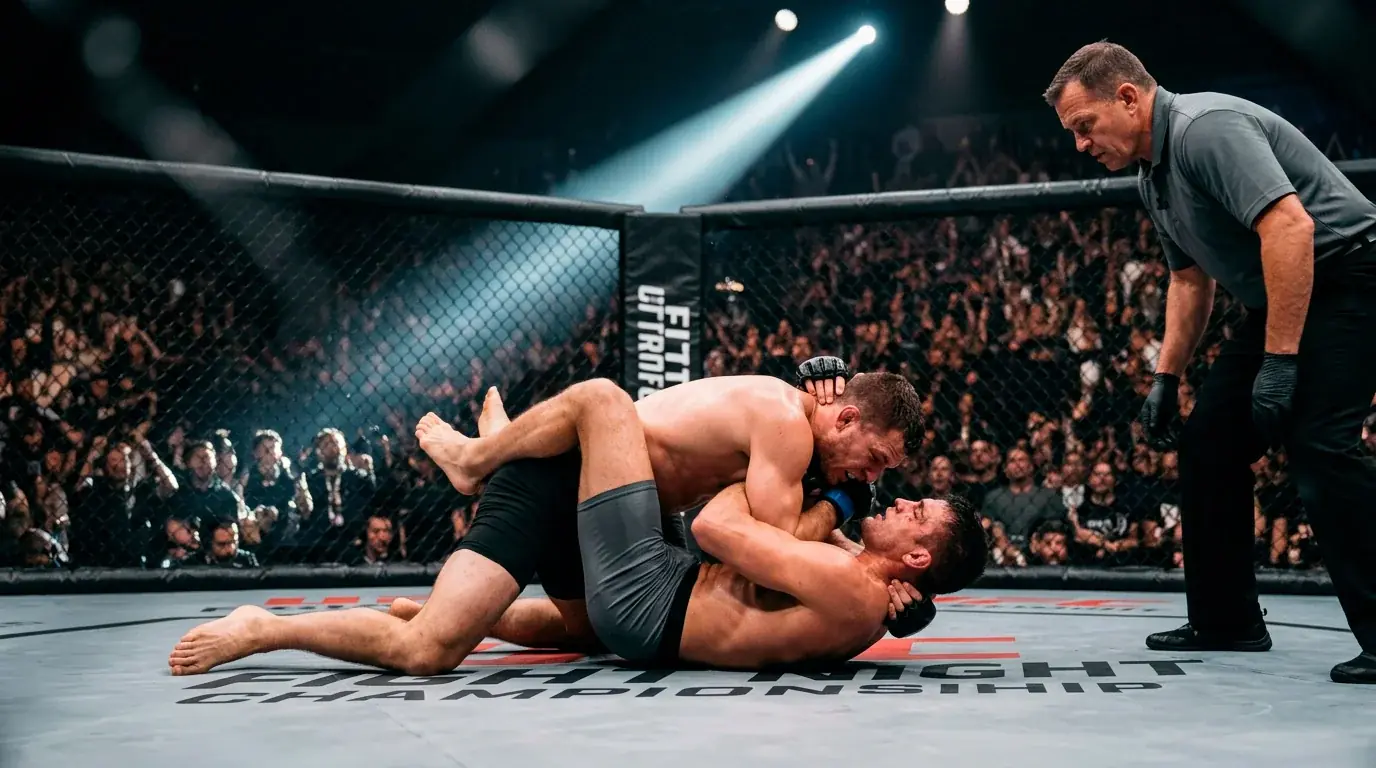
Control time – the minutes and seconds a fighter spends in dominant grappling position – is the stat that most bettors completely ignore. It should not be. Control time wins rounds on the judges’ scorecards under the unified rules, and it creates the conditions for submissions.
A fighter who averages four minutes of control time per fight is almost certainly winning rounds by grappling even if he lands fewer strikes. In a three-round fight, that level of control can easily produce a 29-28 decision. For betting purposes, high control time fighters are strong candidates for the “fight goes the distance” market, because they tend to win by grinding rather than finishing.
Submission attempts and submission rate matter for method of victory markets. A fighter who averages 1.5 submission attempts per fifteen minutes of fight time is an active hunter on the mat. One with 0.2 is content to hold position and score points. The first fighter makes submission finishes a live possibility; the second makes decisions the most likely outcome. Separating position-heavy grapplers from submission-hunting grapplers is one of the simplest analytical distinctions you can make, and it directly informs which method of victory markets offer value.
Record, Form, and Activity
Every time someone shows me a fighter’s record as their primary reason for backing him, I ask the same question: “Against whom?” A 15-1 record built against regional-level opposition tells you almost nothing about how that fighter will perform against a ranked UFC opponent. Context is everything.
When I evaluate a record, I look at three layers. First, the quality of opposition – how many wins came against currently ranked fighters or fighters with winning UFC records? Second, the recency of results – a fighter who went 5-0 three years ago and has gone 1-2 in his last three is trending in the wrong direction regardless of his overall number. Third, the method distribution – does this fighter finish opponents or go to decisions? A 12-0 record with ten decisions suggests a very different fighter from a 12-0 record with eight knockouts.
Activity matters more than most bettors realise. UFC odds in the close-to-even range – roughly the equivalent of 4/5 to evens in fractional – have historically been accurate only about 51% of the time. That thin margin means small informational edges matter. A fighter who has not competed in twelve months carries ring rust risk that the market often underprices. Conversely, a fighter coming off a quick turnaround of six to eight weeks may be physically depleted, especially after a war.
The sweet spot I look for is a fighter on a two-to-three-fight win streak against rising competition, competing roughly three times per year. That profile suggests a fighter in peak form with rhythm and confidence – the kind of form that the market sometimes undervalues when the opponent has a bigger name or a flashier highlight reel.
The Matchup Analysis Framework
Individual stats only become useful when you put two fighters side by side and ask one question: “Where does this fight take place, and who benefits?” That is the entire matchup analysis framework in a single sentence. Everything else is detail.
Toby from Punter2Pro made a point that resonates with my own experience: underdogs win surprisingly often in MMA, and with the right analysis, bettors can find value where bookmakers may underrate a fighter’s style or momentum. Stylistic matchups are the primary mechanism through which those underdog values emerge. A wrestler facing a striker creates a fundamentally different fight from two wrestlers meeting or two strikers exchanging. The market tends to price fighters based on their overall quality rather than their matchup-specific advantages, and that tendency creates opportunities.
My matchup analysis process has four steps. First, I classify each fighter’s primary style: striker, wrestler, grappler, or hybrid. Second, I check the key matchup stat – the attacker’s offensive strength versus the defender’s resistance in the dimension that will determine where the fight takes place. Third, I identify the pace and cardio profile of each fighter – who pushes the pace, who counters, who fades in later rounds. Fourth, I check for specific vulnerabilities: a striker who has been submitted before, a wrestler who has been knocked out by power punchers, a counter-fighter who struggles against pressure.
Each step narrows the range of likely outcomes. By the end, I have a mental model of the fight that looks something like: “Fighter A will try to wrestle. Fighter B has excellent takedown defence but poor cardio. If Fighter A cannot get the fight down in the first two rounds, Fighter B’s striking takes over in the third.” That model tells me which markets to bet and which to avoid. It does not tell me who wins – nothing does with certainty – but it gives me a probability estimate I can compare against the odds.
The most common analytical mistake I see is treating each fighter in isolation rather than as one half of a specific matchup. A fighter’s stats are not fixed properties – they are averages across opponents of varying skill levels. A wrestler’s takedown accuracy drops against elite takedown defence. A striker’s knockout rate drops against fighters with longer reach or better footwork. The matchup filters the stats, and the filtered stats should drive your bet.
Find more expert breakdowns and daily predictions on the betmmafight homepage.
Where to Find the Stats
The single best free resource for UFC fighter statistics is UFCStats.com – the official statistical partner of the UFC. Every fight in UFC history is logged there with round-by-round breakdowns of significant strikes, takedowns, control time, and submission attempts. I open it before I open the bookmaker’s app for every card I bet on.
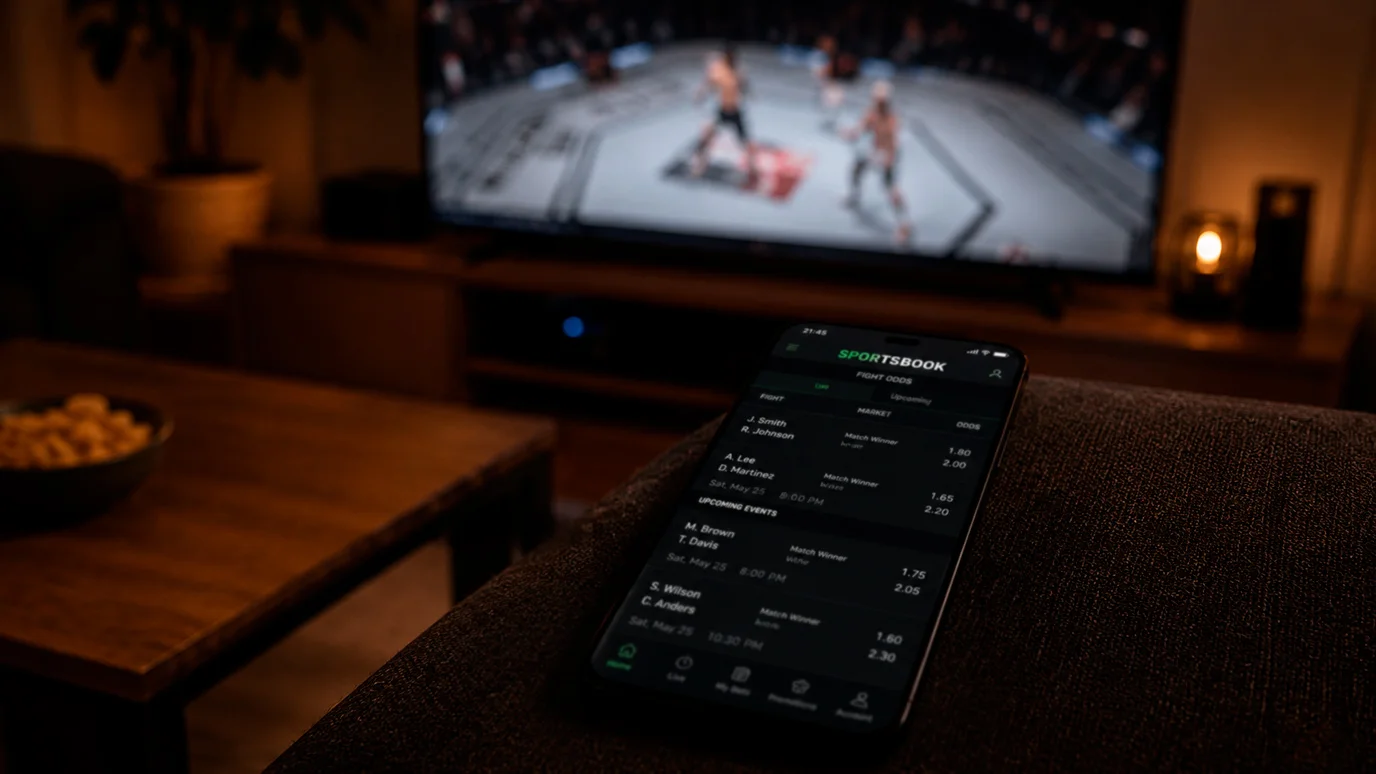
The MMA betting market processed $10.3 billion in handle in 2024, and a large share of that money was wagered by people who never checked a single stat page. That is your edge. UFCStats.com gives you fighter profiles with career averages for SLpM, striking accuracy, striking defence, takedown accuracy, takedown defence, and submission attempts per fifteen minutes. It also gives you fight-by-fight logs so you can see how those averages have shifted over a fighter’s recent bouts.
Beyond UFCStats.com, several other free sources are worth bookmarking. Tapology provides fight records with opponent quality context, showing you the record and ranking of every opponent a fighter has faced. Sherdog offers historical fight results and event archives. FightMetric, which powers UFCStats.com, occasionally publishes deeper analytical pieces. MMA Decisions archives every judges’ scorecard, which is invaluable when you are analysing fighters who frequently go to decision – you can see whether they win close rounds or cruise to lopsided cards.
The key to using these resources effectively is discipline. Do not spend two hours falling down a statistical rabbit hole for every fight on a twelve-bout card. Identify the three or four fights that interest you as potential bets, pull up the fighter profiles, compare the matchup-relevant stats, and build your model. Twenty minutes of focused analysis per fight is more productive than two hours of scattered browsing.
Fighter Pay and Motivation: The Uncomfortable Context
This is the section most UFC betting guides will never write, because it makes people uncomfortable. But ignoring it means ignoring a factor that directly influences fight outcomes and, therefore, betting value.
UFC fighters receive approximately 16% to 20% of the organisation’s revenue. Compare that to the NBA, NFL, and NHL, where athletes collectively earn around 50% of league revenue. The gap is enormous, and it creates a motivation landscape that does not exist in team sports. A fighter on a four-fight deal earning $12,000 to show and $12,000 to win has fundamentally different risk incentives than one earning $500,000 per bout with a Nike sponsorship waiting on the other side.
How does this affect betting? In several concrete ways. Lower-paid fighters on the undercard may take short-notice replacements for the payday alone, even when they are poorly prepared. Fighters nearing the end of their contracts may fight conservatively to preserve their record and negotiate better terms, increasing the probability of decisions. Fighters who have publicly complained about pay or threatened retirement may lack the competitive urgency that defined their earlier careers.
I do not claim that pay explains every upset, but I do track contract situations and public statements about compensation as part of my pre-fight research. A fighter who just signed a new multi-fight deal often performs differently from one who is fighting out his contract. The market does not price motivation because it cannot quantify it. That is precisely why it creates value for bettors who pay attention to the context surrounding the cage, not just what happens inside it.
Building a Pre-Fight Checklist
After nine years of refining my process, I have distilled fight analysis into a checklist I run through in the same order every time. Consistency matters because it prevents me from skipping steps when I think I already “know” the answer – which is exactly when mistakes creep in.
Step one: check the odds and calculate implied probabilities for both fighters. This gives me the market’s baseline expectation before I let my own analysis influence my thinking. Step two: pull up both fighter profiles on UFCStats.com and compare the matchup-critical stats – striking output versus striking defence if I expect a standup fight, takedown accuracy versus takedown defence if I expect grappling. Step three: review the last three fights for each fighter, paying attention to trends in performance rather than just results. Did the winner look sharp or lucky? Did the loser show signs of decline or was it a bad stylistic matchup? Step four: identify the fight’s most likely location – standing or on the mat – and assess which fighter benefits from that location.
Step five: check for external variables – layoff length, camp changes, weight-cut history, injury rumours, and any public statements about motivation or contract status. Step six: build my probability estimate. I assign a percentage to each fighter’s chance of winning and compare it to the implied probability from the odds. If my estimate diverges from the market by more than five percentage points, I have a potential bet. If it does not, I pass.
The checklist takes about fifteen to twenty minutes per fight. On a typical card, I analyse six to eight fights seriously and end up betting on two or three. That ratio – researching broadly, betting narrowly – is the discipline that separates analysis from gambling.
Frequently Asked Questions
What are the most important UFC stats for betting?
Takedown accuracy versus takedown defence is the single most predictive stat pairing because it determines where the fight takes place. After that, striking accuracy and striking defence together reveal standup efficiency. Control time is the most undervalued metric – it predicts decisions and rounds won on the scorecards.
Where can I find free UFC fighter statistics?
UFCStats.com is the best free resource, offering career averages and fight-by-fight breakdowns for every UFC bout. Tapology provides opponent quality context, Sherdog has historical records, and MMA Decisions archives judges’ scorecards for decision analysis.
How much does a fighter’s record actually predict the outcome?
Less than most bettors assume. A record without context is nearly meaningless – 15-1 against regional opposition differs vastly from 10-3 against ranked UFC fighters. Recent form (last three fights), quality of opposition, and method distribution within the record are far more predictive than the headline numbers.
Prepared by the how to bet on a ufc Fight editorial staff.