UFC Submission Betting and Grappling Analytics
 Available in US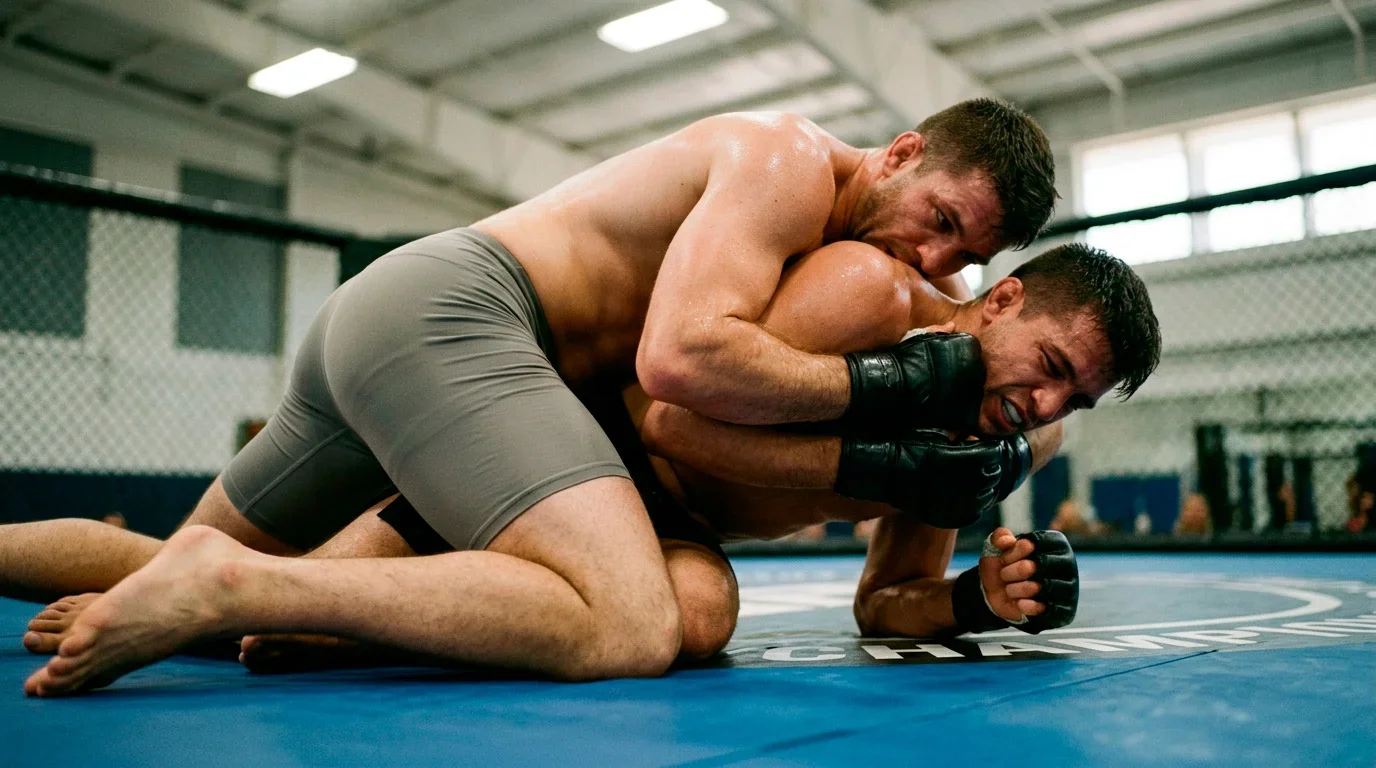
I placed one of my best-ever UFC bets on a submission finish at 9/2 in a lightweight bout that most people expected to be a striking war. What I had noticed — and what the market had not priced — was that the underdog had an elite rear-naked choke game and his opponent had been taken down three times in his previous fight without offering any meaningful resistance from bottom position. The submission came in the second round, and the payout reflected the market’s systematic undervaluation of grappling finishes.
Favourites won about 72% of UFC bouts in 2024, and a meaningful portion of those wins came on the ground. But submission finishes attract far less betting volume than knockouts or decisions, which means the pricing in this market is often softer — and the edges more available — than in more popular bet types.
Grappling Metrics – Identifying High-Percentage Submission Threats
The MMA betting handle reached $10.3 billion in 2024, yet the majority of that money flows into moneyline and KO/TKO markets. Submission betting lives in the margin, and the stats that predict tap-outs are different from the stats that predict knockouts.
Submission attempts per fifteen minutes is the single most important metric. A fighter who averages 1.5 or more submission attempts per fifteen minutes of fight time is actively hunting finishes on the ground rather than simply holding position. This metric separates the submission specialists — fighters whose entire ground game is oriented toward finishing — from the control wrestlers who use grappling for scoring rather than stopping.
Takedown accuracy matters because you cannot submit someone you cannot get to the ground. A fighter with 45% or higher takedown accuracy can reliably initiate the grappling exchanges that create submission opportunities. When paired with a high submission attempt rate, takedown accuracy completes the chain: get the fight to the mat, then attack.
Control time — minutes spent in dominant ground position per fight — provides context for the submission attempt rate. A fighter who spends four minutes per fight in top control with 1.5 submission attempts is working methodically from dominant positions. A fighter with the same 1.5 submission attempts but only one minute of control time is pulling off submissions from disadvantageous positions — guard, bottom half guard, off their back — which is a higher-skill indicator and suggests the threat is present regardless of who dictates the grappling.
The opponent’s takedown defence percentage completes the picture. Against a fighter with 80% or higher takedown defence, even an elite grappler will struggle to create the situations where submissions become possible. Against a fighter with 55% takedown defence, the path to the mat — and therefore to the submission — is wide open.
Division Trends for Submissions
Submission rates vary by weight class in ways that mirror the broader finishing dynamics of each division but with their own distinct patterns. Lightweight and welterweight produce the most submission finishes in raw numbers because the rosters are the largest, but the submission rate as a percentage of total fights is actually highest at bantamweight and women’s strawweight.
At bantamweight, the fighters are technically advanced grapplers with the cardio to sustain scrambles and chain submission attempts across multiple exchanges. The lighter body mass means that positional control is harder to maintain through raw strength, which leads to more transitions, more exposure of the neck and limbs, and more opportunities for submission attacks from unconventional positions.
At heavyweight, submission rates are the lowest in the UFC. The fighters are strong enough to power out of most submission attempts, and the ground game at heavyweight tends to favour ground-and-pound over positional grappling. Betting on a heavyweight submission requires very specific conditions — typically a significant jiu-jitsu disparity between the fighters — and the price should reflect genuine improbability.
Women’s divisions show an interesting split. Women’s strawweight has a submission rate comparable to the men’s lighter divisions, driven by the depth of Brazilian jiu-jitsu talent at 115 pounds. Women’s bantamweight and featherweight, with shallower talent pools, produce fewer submissions because the skill gaps tend to result in one-sided striking finishes rather than competitive grappling exchanges.
Why Submission Odds Often Carry Hidden Value
The submission market is structurally underpriced for reasons that have nothing to do with the probability of a tap-out and everything to do with bettor psychology. Casual fans — and therefore casual bettors — gravitate toward knockouts. The highlight reels are full of devastating strikes. Submissions, by contrast, happen on the ground, often in positions that are difficult for non-grapplers to read, and they lack the instant visual impact of a knockout. The result is less money flowing into submission method bets, which means bookmakers face less pressure to tighten these lines.
I have found consistent value in submission method bets on fighters who are priced as moderate favourites — the 4/7 to 4/9 range — but whose primary finishing mechanism is grappling. The moneyline on these fighters is typically short enough to be unattractive, but the submission method price might be 5/2 or 3/1, reflecting the market’s assumption that any individual method is less likely than the fighter winning by any means. When your analysis suggests the submission is the most probable method by a significant margin, that 5/2 can represent genuine value against a true probability closer to 35% or 40%.
The reverse scenario also holds. When a known grappler is the underdog, the submission method price balloons — 8/1, 10/1, sometimes longer. If the underdog’s path to victory runs exclusively through their grappling, and the matchup dynamics support the takedown-to-submission chain, those prices can be far more generous than they need to be. The bookmaker is pricing the improbability of the upset and the improbability of the specific method simultaneously, which can overstate the combined difficulty when both probabilities are correlated.
For a comprehensive breakdown of how grappling metrics fit into the broader fighter evaluation process, the fighter analysis guide covers striking and grappling data side by side.
The Ground Game Pays for Those Who Study It
Submission betting demands more technical knowledge than knockout or decision betting. You need to understand grappling positions, recognise which fighters are genuinely dangerous from specific positions, and assess whether the matchup creates the conditions for submissions to materialise. That barrier to entry is also its advantage — fewer bettors are willing to do the work, which means the market is less efficient and the value more available. If you are willing to learn the grappling game, the odds will reward you for it.
What grappling stats should I check before betting on a UFC submission?
Focus on four metrics: submission attempts per fifteen minutes of fight time, takedown accuracy, control time in dominant ground positions, and the opponent’s takedown defence percentage. A fighter averaging 1.5 or more submission attempts with 45% or better takedown accuracy against an opponent with below-average takedown defence is a strong candidate for the submission method market.
Which UFC divisions have the highest submission rates?
Bantamweight and women’s strawweight tend to have the highest submission rates as a percentage of total fights. Lightweight and welterweight produce the most submissions in raw numbers due to larger rosters. Heavyweight has the lowest submission rate because the fighters can use their size and strength to resist submission attempts more effectively.
Published by the how to bet on a ufc Fight team.