Common UFC Betting Mistakes and Bankroll Errors
 Available in US
Every experienced UFC bettor I know has a story about their early days that makes them wince. Mine involves a five-leg parlay of heavy favourites on a Fight Night card that I was “certain” about. Four legs cashed. The fifth — a 1/7 favourite who was practically being given away — lost by first-round submission to a late replacement. That single night cost me more than the previous month’s profits and taught me a lesson that no guide could have: the mistakes beginners make in UFC betting are not about bad luck. They are about bad process.
This guide covers the five errors I see most often among newer UFC bettors. Every single one is fixable, and fixing even two or three of them will transform your results.
One of the biggest errors novices make is ignoring proper UFC betting bankroll management, leading to quickly depleted accounts.
Heavy Favourite Traps – Avoiding Negative Value
The instinct to back the favourite feels rational. Favourites won about 72% of UFC bouts in 2024 — a clear majority. But that win rate disguises a critical problem: the odds on favourites are set precisely to account for their higher probability of winning, and in many cases the price does not offer enough return to justify the risk.
UFC odds in the close range — roughly even money to slight favourite — have historically proven accurate only about 51% of the time since 2013. That means in competitive matchups, the market is barely better than chance at identifying the winner. Yet beginners consistently gravitate toward the shorter price, treating it as confirmation rather than information.
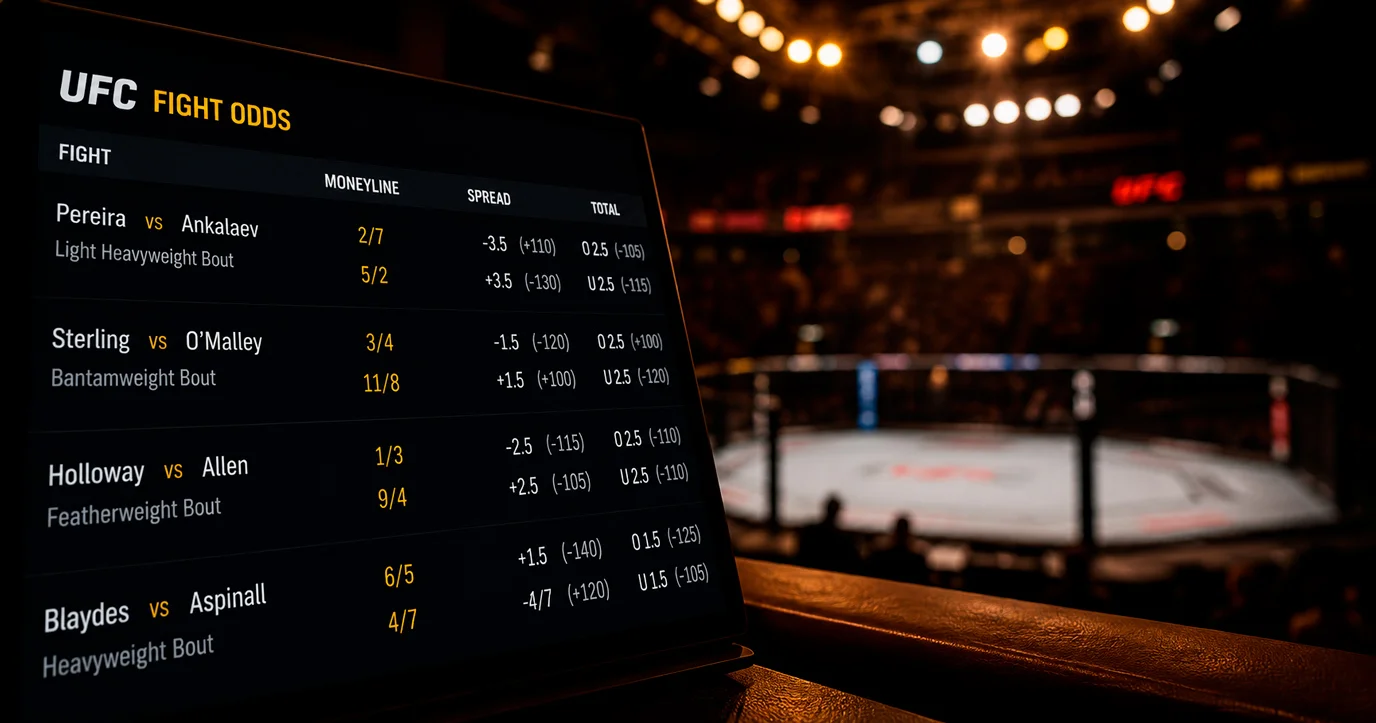
Heavy favourites at odds of 2/9 or shorter do win at high rates — 88% to 93% historically — but the math still works against you. At 2/9, you need to win 82% of the time just to break even. One upset in five bets at those odds erases all profit from the other four. The favourite is not inherently wrong as a bet. The favourite at a bad price is the mistake, and beginners lack the framework to distinguish between the two.
The fix: before placing any favourite bet, calculate the implied probability from the odds and compare it to your own assessment. If the bookmaker says a fighter has a 75% chance and you agree, the bet offers no edge. You need to believe the fighter’s chances are higher than the implied probability — not just that they will win.
Ignoring Matchup Context
A fighter’s record tells you what happened. It does not tell you what will happen next. Beginners routinely bet on fighters with impressive records without considering how the specific matchup in front of them changes the equation.
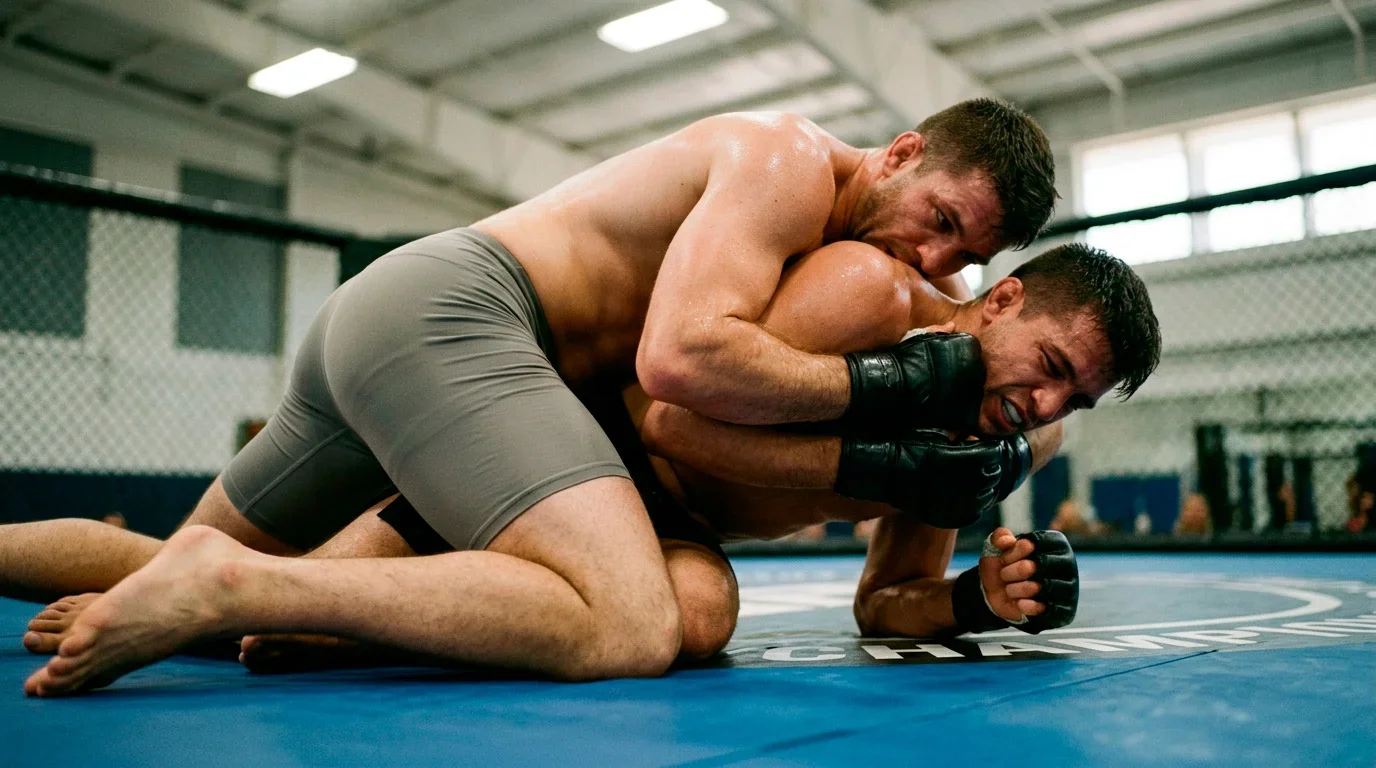
A striker with a 12-2 record and eight knockouts looks terrifying on paper. But if their next opponent is an elite wrestler with a 90% takedown accuracy rate, those knockout numbers become almost irrelevant. The fight is likely to take place on the ground, where the striker’s primary weapon is neutralised. Matchups matter more than records in MMA because the sport’s multi-disciplinary nature means every fight presents a unique stylistic puzzle.
The fix: for every fight, ask one question before anything else — what is the most likely location of this fight? On the feet or on the ground? The answer shapes everything that follows: which method market to target, which totals to consider, and which fighter’s skill set is most likely to be expressed.
Overloading Parlays
Parlays are the gateway drug of UFC betting mistakes. The combined odds look spectacular, the potential payout triggers excitement, and the process of selecting five or six “confident” picks feels like skilled analysis. It is not. It is probability multiplication working against you at every step.
Five independent favourites with a 72% individual win rate produce a combined probability of roughly 19%. One in five. The bookmaker’s compounded margin makes the actual expected return even worse. I have never met a bettor with a profitable long-term record on parlays of more than three legs, and I have met hundreds who have lost significant money chasing multi-leg accumulators.
The fix: limit parlays to two or three legs, stake them at a fraction of your normal unit, and treat them as supplements to a singles-based strategy rather than replacements. If the only way a bet looks appealing is inside a parlay, it probably is not worth placing at all.
Skipping Bankroll Discipline
Toby from Punter2Pro makes a point that resonates well beyond underdog betting: with the right analysis, bettors can find value where bookmakers underrate a fighter’s style or momentum. But even the best analysis in the world fails if you stake 20% of your bankroll on a single fight and it loses. Bankroll discipline is the infrastructure that allows your analytical edge to compound over time.
Beginners typically size their bets based on confidence rather than mathematics. “I really like this pick” translates to a larger stake, while “this is more of a gut feeling” translates to a smaller one. The problem is that perceived confidence does not correlate with actual accuracy — studies across sports betting consistently show that bettors are no better at predicting which of their bets will win than random chance would suggest.
The fix: adopt a flat staking model — the same unit size on every bet regardless of confidence level — and define that unit as 1% to 3% of your total bankroll. For a detailed breakdown of staking models and how to set them up, the bankroll management guide covers the mathematics step by step.
Start your journey on the right foot by checking out our professional UFC betting hub.
Betting on Name Recognition
The UFC promotes its stars aggressively, and that promotion creates a perception of dominance that may no longer reflect reality. A former champion coming off a two-year layoff still carries the aura of their title reign, and the betting public prices them accordingly. The market often moves toward the bigger name simply because more people recognise it and default to backing it.
Name recognition becomes a betting liability when it substitutes for current analysis. A fighter’s last five performances — not their career highlight reel — determine their current probability of winning. Veterans returning from long absences, fighters coming off losses that revealed new vulnerabilities, and former champions now competing against a younger generation of athletes are all scenarios where name recognition inflates the market price beyond what the current evidence supports.
The fix: evaluate every fighter based on their last three to five bouts. Ignore the narrative, ignore the highlights, ignore the promotional material. Ask what the data shows about their current level of performance and whether the price reflects that level. If the answer is no, you have either found a value bet or identified a fighter to avoid — both of which are profitable conclusions.
Every Mistake Has a Fix
The encouraging truth about UFC betting mistakes is that they are all process errors, not intelligence errors. You do not need to become a better analyst to fix them. You need to build simple rules — implied probability checks, matchup-first analysis, parlay limits, flat staking, recency-weighted evaluation — and follow them consistently. The mistakes disappear, and the results improve, without any change to your underlying knowledge of the sport.
What is the biggest mistake new UFC bettors make?
The most costly mistake is consistently backing heavy favourites without checking whether the odds offer positive expected value. Favourites at very short prices win often but do not pay enough to cover the losses from the inevitable upsets. One loss at 1/7 erases the profits from six winning bets at the same odds. Evaluating the price — not just the probability — is the single most impactful change a beginner can make.
How do I avoid emotional betting on UFC fights?
Adopt a flat staking system where every bet carries the same unit size regardless of how strongly you feel about it. Remove the connection between emotional conviction and financial exposure. Additionally, complete your analysis and place your bets before fight night — the atmosphere of a live event or a broadcast creates emotional pressure that leads to impulsive in-play decisions. Having your positions set before the first fight starts neutralises that pressure.
Prepared by the how to bet on a ufc Fight editorial staff.