UFC Decision Betting and Distance Market Strategy
 Available in US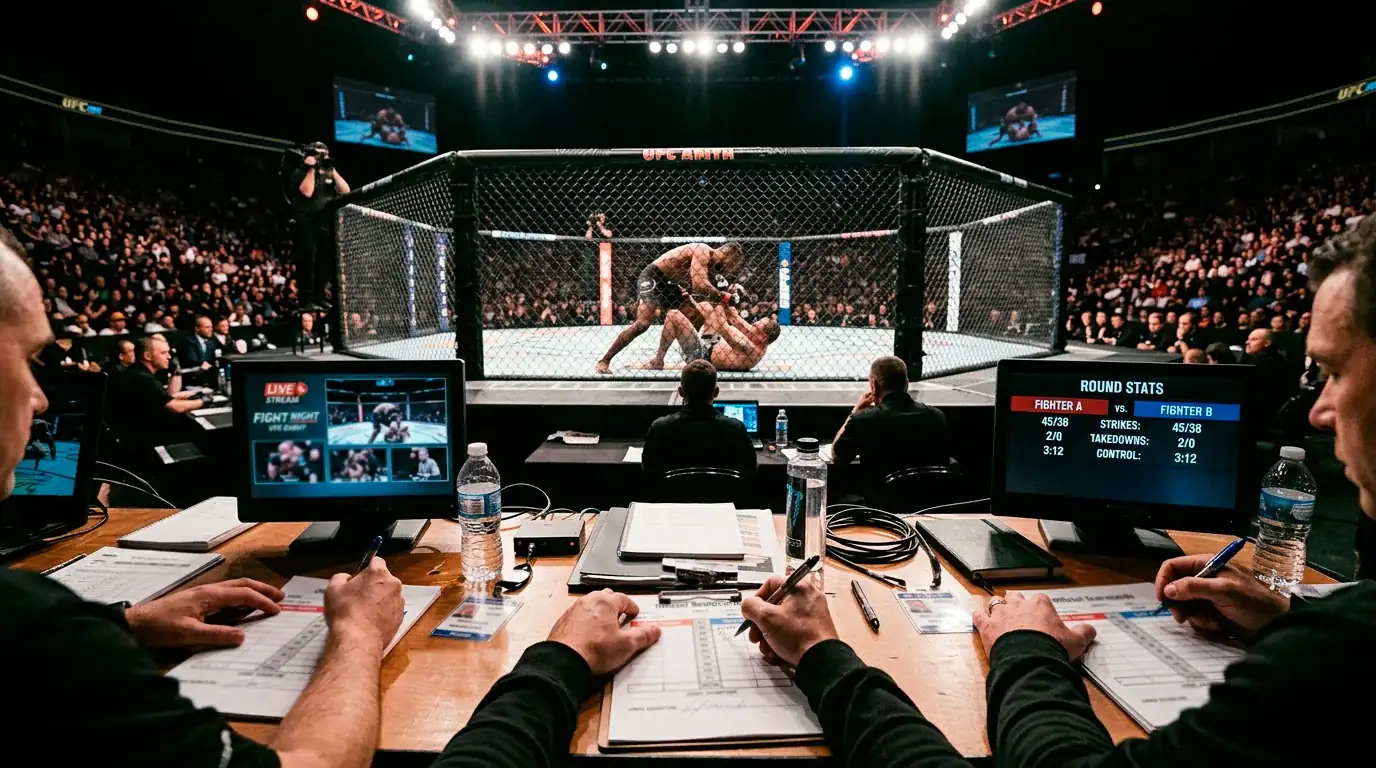
My best month of UFC betting in 2024 had nothing to do with picking spectacular knockouts or last-second submissions. It came from a stretch where I identified four fights in a row that were overwhelmingly likely to go to the scorecards — and priced generously for doing so. The decision market is where quiet, analytical bettors thrive. It rewards pattern recognition over excitement, and it punishes the casual bettor’s bias toward finishes.
Favourites won roughly 72% of UFC bouts in 2024, but that headline number obscures a crucial detail: a substantial share of those wins came by judges’ decision rather than stoppage. The decision market does not ask you to predict who wins. It asks you to predict that neither fighter finishes the other — a structurally different question with its own set of predictive indicators.
Scorecard Statistics – Analyzing Decision-Prone Fighters
Certain fighters are decision machines. They win consistently but rarely finish opponents, and they rarely get finished themselves. Identifying these profiles is the foundation of decision betting.
The first profile is the high-volume point fighter. These are strikers who land at range — jabs, leg kicks, front kicks — accumulating scoring strikes without committing to power shots that could end the fight. They maintain distance, avoid exchanges in the pocket, and win rounds by outpointing rather than out-damaging. When two fighters with this profile meet, the probability of a decision climbs dramatically.
The second profile is the control wrestler. Wrestlers who take opponents down, hold top position, and grind out rounds without hunting for submissions or ground-and-pound finishes. Their path to victory runs through the scorecards by definition — they are not looking for a stoppage, they are looking for positional control that judges reward with round-by-round scoring.
The third is the durable counter-striker. Fighters with excellent defensive metrics — high striking defence percentage, low absorption rate — who wait for opponents to overcommit before landing clean counters. They rarely initiate enough offence to generate a finish, but they are extremely difficult to put away because they are not absorbing the kind of sustained damage that leads to stoppages.
When I see any combination of these profiles on both sides of a matchup, the decision market immediately becomes my primary focus. Two point fighters will jab and circle for fifteen minutes. A control wrestler against a durable counter-striker will produce rounds of clinch work and reset sequences. The finish probability in these matchups is substantially lower than the market’s default pricing reflects.
Division and Round Format Impact
Decision rates vary meaningfully across weight classes. Lighter divisions — bantamweight, flyweight, women’s strawweight — produce more decisions because the fighters carry less one-punch power and the technical exchanges are faster and more sustained. Heavier divisions skew toward finishes for the opposite reason.
The round format matters equally. Five-round fights — main events and title bouts — go to the scorecards more frequently than three-round fights because both fighters have additional time to recover from difficult moments. A knockdown in round one that might produce a finish in a three-rounder can be absorbed and survived in a five-round fight, with the hurt fighter regrouping during the minute break and competing effectively in subsequent rounds.
UFC odds in the close range — roughly even money to slight favourite — have historically proven accurate only about 51% of the time since 2013. Those competitive matchups are also the fights most likely to go the distance, because evenly matched fighters tend to neutralise each other’s finishing ability. The decision price in these bouts is often the most interesting play on the card — you are betting on the fight’s structure rather than gambling on which evenly matched fighter edges the other.
I pay particular attention to five-round co-main events and title fights between fighters who have both gone to decision in at least three of their last five bouts. That overlap of historical tendency and extended format pushes the true decision probability well above what most bookmakers price, and the go-the-distance market becomes a strong value play. For more on how fight duration connects to round-by-round betting and totals, the round betting guide covers those mechanics in detail.
Pricing Patterns for Decisions
The decision market is consistently underpriced for one structural reason: the public prefers to bet on finishes. Knockouts are exciting. Submissions are dramatic. A split decision after fifteen minutes of wrestling is neither, and casual bettors allocate their stakes accordingly. That bias inflates KO/TKO and submission method prices while leaving the decision price softer than it should be.
I have tracked decision pricing across more than 300 fights over the past three years, and the pattern is remarkably stable. In bouts where both fighters have a decision rate above 50% in their last five fights, the bookmaker’s implied probability for the fight going the distance averages roughly 40%. My tracked outcomes for the same set of fights show the actual distance rate closer to 55%. That 15-percentage-point gap is one of the most reliable edges I have found in UFC betting.
The gap widens further when the fight is scheduled for five rounds. Bookmakers set decision odds for five-rounders using models that weight recent finishing rates, but those models systematically underestimate how the extra two rounds change fight dynamics. The conservative pacing that five rounds encourage — both fighters knowing they have time to work, neither willing to risk everything in an early blitz — pushes fights to the scorecards at a rate the market has not fully caught up to.
One pricing trap to avoid: do not confuse a long decision price with value. If a fighter with a 70% finish rate is matched against another finisher, the decision price will be long — 3/1 or higher — but that length reflects genuine improbability rather than market inefficiency. Decision betting is about finding fights where the true probability is higher than the implied probability, not about chasing long odds on unlikely outcomes.
Scorecards as a Betting Thesis
Decision betting is not glamorous. There are no highlight-reel moments, no sudden reversals, no crowd eruptions. What there is, reliably, is a market that the public undervalues because it lacks the emotional appeal of a finish. For the bettor willing to study fighter profiles, division tendencies, and round format effects, the decision market offers one of the most consistent edges in UFC betting. Let the crowd chase knockouts. The scorecards pay quietly and often.
What percentage of UFC fights end by decision?
The exact percentage fluctuates year to year, but roughly 40% to 45% of UFC bouts go the full distance and are decided by the judges. The rate is higher in lighter weight classes and five-round fights, and lower in heavyweight and light heavyweight where knockout power is more prevalent.
Are five-round fights more likely to go to a decision?
Yes. Five-round fights go to the scorecards more frequently than three-round bouts because both fighters have additional time to recover from difficult moments and tend to pace themselves more conservatively. The extra two rounds reduce the finish rate compared to the three-round format, making the decision and go-the-distance markets particularly worth evaluating in main events and title fights.
Written by the editors at how to bet on a ufc Fight.