UFC Method of Victory Bets and Prop Markets
 Available in US
I remember a fight card in early 2020 where I had the winner right on four out of five bets and still lost money for the night. Every single moneyline pick was a short-priced favourite, and the one miss wiped out the profits from the other four. That was the night I started paying serious attention to method of victory markets — because the same fighters I was backing on the moneyline were often available at significantly better odds when I specified how they would win.
Method of victory betting splits a fight outcome into its component parts. Instead of asking “who wins?” you are answering “who wins, and how?” The three categories are KO/TKO, submission, and decision. Favourites won around 72% of UFC bouts in 2024, but the price you pay on a straight moneyline for that favourite rarely compensates for the risk. Specifying the method lets you capture a longer price on the same fighter when you have a genuine read on how the fight plays out.
This guide walks through each method market individually — what drives the odds, what to look for in the matchup, and where the pricing tends to be softest.
KO and TKO Markets – Wagering on Striking Stoppages
Knockouts are what sell pay-per-view cards and fill highlight reels, so it is no surprise this is the method of victory market that draws the most casual betting action. That public interest is worth keeping in mind because it affects how bookmakers price these selections.
A KO/TKO bet wins when the referee steps in to stop the fight due to strikes — whether the opponent is knocked unconscious, dropped and unable to defend, or takes sustained damage on the feet or on the ground. Corner stoppages between rounds also typically settle as TKOs for this market. What does not count here is a submission stoppage or a doctor’s stoppage caused by a cut rather than impact damage, though settlement rules vary slightly between bookmakers.
The fighters most likely to deliver a KO/TKO share a few measurable traits: high significant strikes landed per minute, above-average striking accuracy, and a history of finishing fights inside the distance. Heavyweight bouts carry the highest knockout rates across the sport — one clean shot at 120 kilograms does different things to a human body than the same punch at 61 kilograms. But knockout value is not exclusive to the heavier divisions. Bantamweight and featherweight produce plenty of finishes from fighters with speed and precision rather than raw power.
Where I find the most consistent edges in this market is when a strong striker faces an opponent with poor takedown defence. The fight is likely to stay on the feet, which raises the probability of a KO/TKO, but the market sometimes prices the method only slightly shorter than it would in a more wrestling-heavy matchup. That small mispricing is your opportunity.
The Submission Market
Submission betting is where I think the sharpest edges in method markets tend to hide. The general public gravitates toward KO/TKO bets — they are flashier and easier to visualise. Submissions draw less recreational money, which means bookmakers occasionally leave more value on the table.
A submission win occurs when a fighter forces their opponent to tap out or when the referee determines a fighter is unconscious from a chokehold. Rear-naked chokes, guillotines, armbars, and triangle chokes are the most common finishes, but the UFC has seen victories from everything from heel hooks to D’Arce chokes. The key statistics to evaluate are takedown accuracy, control time on the ground, and submission attempts per fifteen minutes. A fighter who can consistently take opponents down, hold them there, and threaten with chokes or joint locks has a genuine path to this market.
The matchup context matters enormously. A skilled grappler facing a pure striker with limited ground defence is an obvious spot to consider the submission. Less obvious — and often more profitable — is backing the submission when both fighters are grappling-heavy. Those fights can produce extended ground exchanges where scrambles and transitions create openings that would not exist against a more defensively cautious striker who simply gets back to their feet.
One thing I have learned the hard way: do not confuse a fighter’s ground game with their finishing ability on the ground. Some fighters are outstanding at controlling position but rarely attempt submissions. They tend to win decisions, not tap-outs. The submission market rewards finishers specifically, so look for fighters with a high ratio of submission wins relative to their total ground control time.
The Decision Market
Decision betting is the market that rewards patience — both in the fight and in your analysis. A decision occurs when both fighters make it to the end of the scheduled rounds and the outcome is determined by three cageside judges scoring each round. It can be unanimous, split, or majority, but for betting purposes, a win by decision covers all three variations.
UFC odds in the close range — roughly even money to slight favourite territory — have historically proven accurate only about 51% of the time since 2013. Fights in that competitive range are precisely the ones most likely to go the distance, which means the decision market is often where the most interesting pricing sits for evenly matched bouts.
Certain fighter profiles push a bout toward the scorecards. High-volume point fighters who land at range but lack one-punch power. Wrestlers who control rounds through top position without hunting submissions. Counter-strikers who read and react rather than pressing forward with aggressive offence. When both fighters in a matchup fit these profiles, the decision probability climbs well above what the casual market often prices.
I like this market particularly in five-round main events and title fights. The extra two rounds give both fighters more time to survive difficult moments and recover from knockdowns, which reduces the finish rate compared to three-round bouts. If you believe the fight goes long, the decision price is almost always more generous than the moneyline on either fighter, offering a way to extract value from a fight you expect to be competitive and grinding rather than explosive.
How Method of Victory Odds Are Priced
A question that took me a while to figure out: why do the method of victory odds not simply add up to match the moneyline? The answer is the bookmaker’s margin. Each method carries its own overround, and when you add the implied probabilities across all six selections — Fighter A by KO/TKO, Fighter A by submission, Fighter A by decision, Fighter B by KO/TKO, Fighter B by submission, Fighter B by decision — the total will exceed 100%, often by 15 to 25 percentage points. That extra percentage is where the bookmaker earns their profit.
What this means practically is that some methods within a fight are priced more efficiently than others. Bookmakers invest the most effort in pricing the moneyline correctly because it attracts the heaviest handle. The method breakdown underneath receives less scrutiny, particularly for fighters without an obvious finishing style. That imbalance is your edge.
One pricing pattern I see repeatedly: when a favourite is expected to win by KO/TKO, the submission and decision lines for that same fighter tend to drift wider than they should. The market anchors on the most likely method and underweights the alternatives. If you have reason to believe the fight goes differently from consensus — say, the favourite’s opponent has an underrated chin and solid defensive wrestling that could force a decision — the pricing on the less popular method is often soft.
Compare method pricing across at least three UK bookmakers before placing the bet. The variance between operators is larger in method markets than on the moneyline, and a few percentage points of implied probability difference translates directly into better long-term returns.
Matching the Method to the Matchup
Method of victory betting is not about guessing — it is about reading a matchup deeply enough to have a justified opinion on how the fight ends. Start with the stylistic collision: striker versus grappler, finisher versus grinder, pressure fighter versus counter-puncher. Then look at the statistics that support or contradict the obvious narrative. When your analysis points clearly toward one method, check the price. If the bookmaker is offering longer odds than your assessment warrants, you have found a bet worth placing.
I still place moneyline bets when the method feels genuinely uncertain. But when the how is as clear to me as the who, the method market is almost always where the better value sits. For a deeper look at how to interpret the numbers behind these markets, I have put together a guide on KO/TKO betting specifically that goes further into the data.
What is method of victory betting and how does it work?
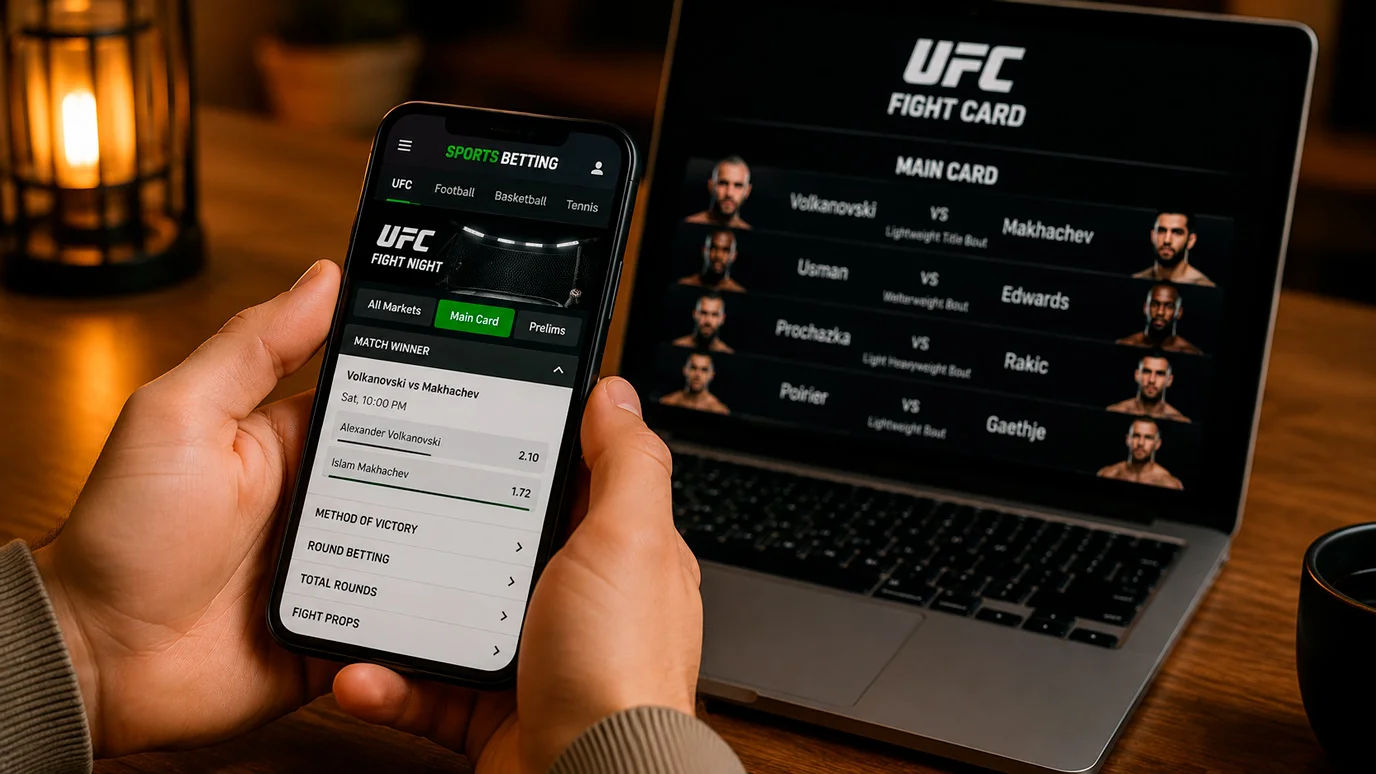
Method of victory betting asks you to predict both who wins a UFC fight and how they win it. The three categories are KO/TKO, submission, and decision. Each fighter has odds listed for each method, giving you six possible selections per fight. The odds are longer than a straight moneyline because you are making a more specific prediction.
Can I combine method of victory with round betting?
Yes. Some UK bookmakers allow you to combine method of victory with round group selections inside a bet builder. For example, you could back Fighter A to win by KO/TKO in rounds one or two. The combined odds are longer because you are layering predictions, but the bet can offer strong value when your analysis points to a specific outcome with confidence.
Prepared by the how to bet on a ufc Fight editorial staff.